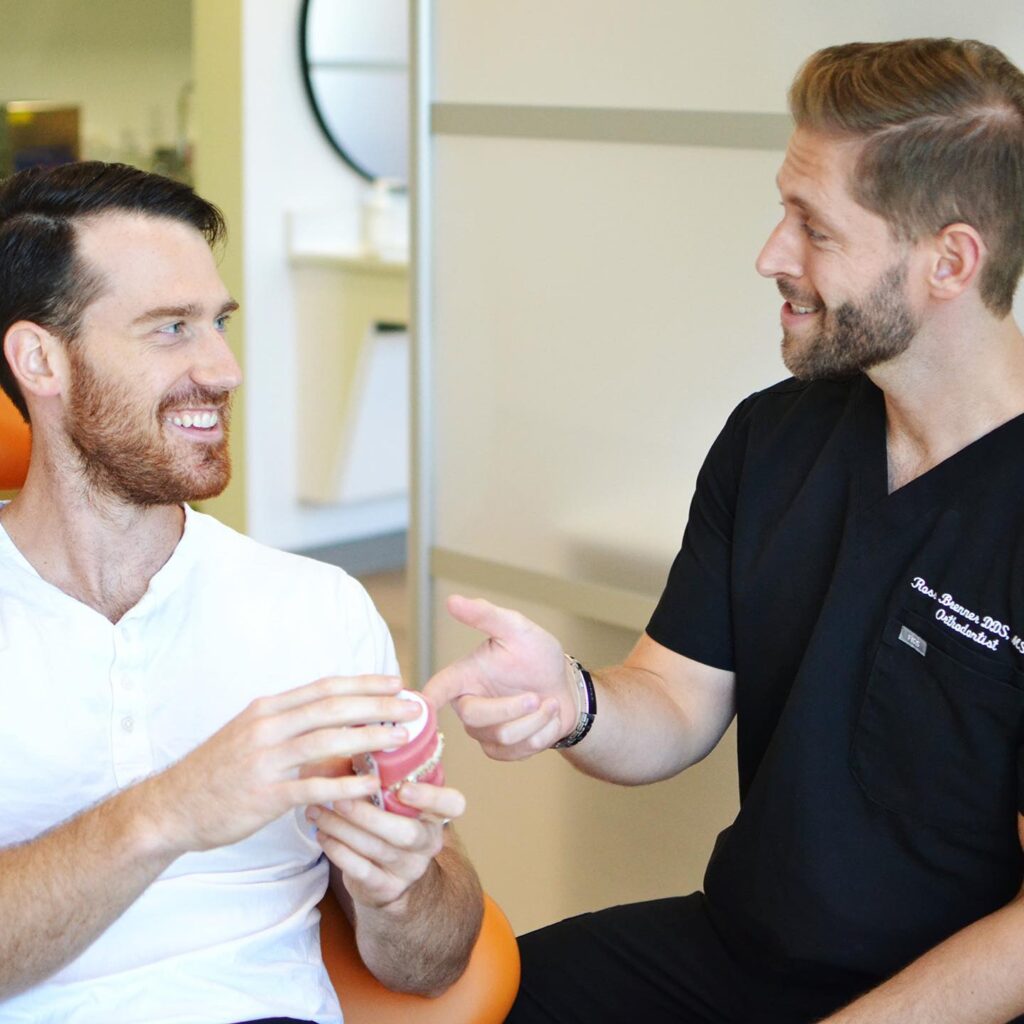
If you’ve been told you need braces but you’d love the look of clear aligners, there’s a third path worth exploring. Using braces and aligners together, often called hybrid orthodontic treatment, blends both appliances into one coordinated plan. It’s a flexible approach that gives you precision where you need it and discretion where you want it.
Below, we’ll walk through how hybrid treatment actually works, who it fits best, what to expect from the process, and how it compares to braces or aligners alone.

What Is Hybrid Orthodontic Treatment?
Hybrid orthodontic treatment uses both braces and clear aligners within a single, staged plan. Instead of picking one appliance for the entire process, your orthodontist matches the right tool to each phase of tooth movement. Braces typically handle the heavy lifting first. Aligners finish the job with precision and polish.
Hybrid treatment isn’t an off-the-shelf product. It’s a planning approach. At ATX Braces, board-certified orthodontists Dr. Brenner and Dr. Konstantoni design hybrid plans around your bite, your goals, and your lifestyle.
The most common pattern looks like this: metal braces or clear braces first for complex movements, then clear aligners for finishing. But hybrid treatment can also mean braces on one arch and aligners on the other. In some cases, we use short-term braces in the middle of an aligner plan to correct a stubborn tooth, then return to trays.
This approach shines when neither braces alone nor aligners alone would produce the best outcome. It gives your care team more tools to solve a wider range of bite and alignment issues inside a single plan.
How Hybrid Treatment Works: Step-by-Step
Every hybrid plan at ATX Braces starts with a careful look at your teeth, bite, and smile goals. Here’s what the process looks like from start to finish.
- Consultation and digital scans. Your first visit includes a free consult with board-certified orthodontists Dr. Brenner and Dr. Konstantoni, 3D digital scans, and photos. You’ll leave with a written, staged treatment plan that spells out which appliance you’ll wear and when.
- Braces phase. We start with braces when your case needs serious control. Rotations, vertical movements, bite correction, and root torque are all easier to manage with brackets and wires. This phase does the heavy lifting that sets up everything that follows.
- Transition point. Once your teeth are ready for aligners, we move to the next phase. The timing isn’t based on a calendar. It’s based on how your teeth respond, which we track at each visit.
- Aligner phase. With the hard work done, clear aligners take over. This phase refines spacing, finishes alignment, and improves aesthetics. Trays are nearly invisible and removable for eating and brushing.
- Retention. After active treatment ends, retainers keep your new smile in place long-term. Members of our lifetime retainer club get replacement retainers whenever they need them.
Throughout the process, we check your progress at every visit and adjust the plan as needed. Teeth don’t always move on a predictable schedule, so flexibility matters. Expect open conversations, honest updates, and small course corrections along the way.
Benefits of Combining Braces and Aligners
Hybrid treatment gives you advantages you can’t get from either appliance alone. Here’s what families in Pflugerville and Cedar Park appreciate most:
- Faster overall treatment for moderate to complex cases. When teeth need significant repositioning, braces move them more efficiently than aligners. Starting with braces can shorten your total time in treatment compared to using aligners the whole way.
- Precise control over difficult movements. Severe rotations, intrusions, and bite corrections respond better to brackets and wires. Hybrid treatment uses that strength where it counts.
- Discretion when it matters most. The aligner phase is nearly invisible, which is a big plus for teens and adults who want a subtle look during the final stretch, especially around weddings, graduations, or professional milestones.
- Easier hygiene during the aligner phase. Trays come out for brushing, flossing, and meals. That makes gum health easier to maintain compared to full-time braces.
- Fewer emergency visits later on. Once you’re in aligners, there are no brackets to break or wires to poke. That means fewer unplanned trips to our home office.
- Customizable to your life. Hybrid plans adapt. If you have a big event coming up, we can time the aligner phase so you’re smiling with confidence on the day that matters.
For many families, hybrid treatment pairs the precision of braces for the tough movements with the comfort and discretion of aligners for the finish, giving you the right tool at the right time.
Braces vs. Aligners vs. Hybrid: Side-by-Side Comparison
Not sure which approach fits your case? This quick comparison breaks down the key differences.
| Factor | Braces Alone | Aligners Alone | Hybrid Treatment |
|---|---|---|---|
| Best for | Complex bites, severe rotations, growing kids | Mild to moderate crowding or spacing | Moderate to complex cases needing both control and discretion |
| Aesthetics | Visible (clear brackets available) | Nearly invisible | Visible during the brace phase, invisible during the aligner phase |
| Duration | 12 to 24 months (typical range) | 6 to 18 months for mild cases | Often shorter than aligners alone for complex bites |
| Hygiene | Requires extra care around brackets | Easy, since trays are removable | Easier during aligner phase |
| Compliance needed | Low, since braces are fixed | High, with 20 to 22 hours of wear per day | Mixed, depending on phase |
| Office visits | Every 4 to 8 weeks | Every 6 to 10 weeks | Varies by phase |
Which treatment is faster, aligners or braces? For simple cases, aligners and braces finish in similar timeframes. For complex cases, braces usually move teeth faster because they work on every tooth at once. Hybrid treatment often splits the difference, delivering faster results than aligners alone when the case calls for significant movement.
The right choice depends on your bite, your lifestyle, and your goals. That’s why a free consult with Dr. Brenner and Dr. Konstantoni is the best next step.
What to Expect From Your Hybrid Treatment Plan
Every hybrid plan is built around three things: case complexity, total treatment length, and which appliances you’ll wear in each phase. A short braces phase followed by a straightforward aligner finish looks very different from extended, back-and-forth treatment, which is why we map out every phase before you begin.
Orthodontic insurance benefits usually apply to hybrid treatment the same way they apply to braces or aligners alone, since it is planned as one complete orthodontic case. Our team will verify your benefits before you start.
At ATX Braces, your free consult includes a written plan that lists every phase of treatment and what to expect in each one. We also offer flexible payment plans so you can see how everything fits together before you commit.
Who Is a Good Candidate for Hybrid Treatment?
Hybrid treatment isn’t for everyone, but it fits more people than you might think. You may be a strong candidate if any of the following apply:
- You have complex bite issues, severe crowding, or significant tooth rotations that aligners alone would struggle to correct.
- You’re an adult or teen who wants the aesthetics of clear aligners but needs brace-level precision for part of the plan.
- You’re already in aligners and your teeth aren’t tracking the way they should. Adding a short braces phase can get your plan back on course.
- You have a big event coming up and want to wear aligners for that specific window, like a wedding, prom, or new job.
- You want the shortest possible treatment for a moderate to complex case without sacrificing the look of aligners toward the end.
Hybrid treatment isn’t ideal for very mild cases, where aligners alone will do the job just as well. It’s also not the best fit for patients who won’t commit to wearing aligners 20 to 22 hours a day during the clear tray phase.
Final candidacy is confirmed at a consultation with digital records and scans. Dr. Brenner and Dr. Konstantoni will walk you through your options and tell you honestly whether hybrid treatment is the right call for your smile.

Frequently Asked Questions
What is hybrid treatment in orthodontics?
Hybrid treatment is a staged orthodontic plan that uses both braces and clear aligners within the same case. Braces typically handle complex movements like rotations and bite correction first, then clear aligners finish the alignment with precision and a nearly invisible look. It’s a planning approach, not a product, and it’s customized to each patient.
Which is faster, aligners or braces?
For simple cases, both finish in similar timeframes. For complex cases, braces are usually faster because they work on every tooth at the same time. Hybrid treatment often lands in the middle, delivering results faster than aligners alone when significant movement is required, while still giving you an aligner finish.
What is the 30-minute rule for Invisalign?
The 30-minute rule is a general guideline that clear aligners should be out of your mouth for no more than about 30 minutes per meal, with a daily wear target of 20 to 22 hours. Longer breaks slow your progress and can push back your finish date. During the aligner phase of hybrid treatment, consistent wear is key to staying on track.
Does insurance apply to hybrid orthodontic treatment?
In most cases, yes. Orthodontic insurance benefits usually apply to hybrid plans the same way they apply to braces or aligners alone, since hybrid treatment is planned as one complete orthodontic case. We’ll verify your benefits before you start.
Can I switch from aligners to braces mid-treatment?
Yes, and it’s one of the most common reasons patients end up with a hybrid plan. If aligners aren’t moving a tooth the way they should, or if a new issue appears during treatment, adding braces (sometimes just on a few teeth) can get things back on track without starting over.
Is hybrid treatment more uncomfortable than one appliance?
Not usually. You’ll feel the normal pressure and adjustment soreness that comes with any orthodontic movement, but hybrid treatment doesn’t layer extra discomfort on top. In fact, the aligner phase is often easier than full-time braces because there are no brackets or wires to irritate your cheeks.
Ready to Explore Your Options?
If you’re curious whether hybrid treatment is right for you or your teen, the best next step is a free consult with board-certified orthodontists Dr. Brenner and Dr. Konstantoni. You’ll get digital scans, a clear written plan, and honest answers about every option on the table, with no pressure to commit.
ATX Braces is your home for one-of-a-kind smiles, with two convenient locations:
- Pflugerville: 1601 E Pflugerville Pkwy., Building 2, Suite 2202 | 512-640-9456
- Cedar Park / Avery Ranch: 10513 W Parmer Ln, Suite 2100, Austin | 737-257-4847
Schedule your free consult today and let’s start creating confident, courageous smiles together.